Family Counseling in Chennai

Or when there are constant arguments, conversations are breaking down, or one person’s problems start affecting everyone at home, it can be hard to know where to turn. Family therapy is a confidential, structured space where family members sit with a trained professional to talk about what is happening between them and find steadier ways of relating.
This page explains what to expect and how family therapy in Chennai works. Doc Gautham’s Neuro Center, Chetpet, is a psychiatry-led clinic established in the year 1988. Dr. Gautham evaluates every individual before determining a course of treatment, so if a family’s issues are related to a mental health concern, therapy can be scheduled along with an appropriate medical evaluation.
At a glance | |
|---|---|
Where | Doc Gautham’s Neuro Centre, 4/68 P C Hostel Road, Chetpet, Chennai 600031 |
Who it’s for | Families and family members of any age: parents, children, teenagers, siblings, partners and extended family |
How to start | Call, or request a telemedicine consultation if you live outside Chennai. |
Sessions | Format, length, and fees: |
What Is Family Therapy?
Family therapy (also known as family counseling or systemic psychotherapy) is a talking therapy that involves not only the individual but also the people closest to him or her. Rather than asking “whose fault is this?” it asks, “What is happening between us, and what might help?”
Sessions bring family members together with a trained therapist who helps each person be heard, reduces blame, and helps the family find new ways to communicate and solve problems. Family can mean parents and children, grandparents, siblings, partners, caregivers, or anyone who is an important part of your life.
Who Can Benefit From Family Therapy?
There is no need to wait for a crisis. Families often call for help when:
The same arguments keep repeating, without resolution.
Family members don’t speak or avoid one another.
A major change has upset everything, whether it is an illness, death, separation, remarriage, moving, or a child leaving or returning home.
A child or teenager’s behavior is causing concern in the household.
One person’s mental health, addiction, or health condition is impacting all.
One family member is doing most of the caregiving or emotional work.
The roles and boundaries between generations seem vague.
Family therapy is appropriate for children and adults of all ages, but not for every situation. An initial assessment tells us what will help the most.
Family Problems Commonly Treated in Therapy
These are common reasons for families to seek help.
Communication Difficulties
That turns conversations into arguments. Or no one says what they mean. Therapy helps family members identify the patterns that continue to recur, who pulls back and who pushes, and work on listening and talking in ways that are easier to hear.
Parent–Child Disputes
Parents and children can get stuck in conflicts about studies, screens, friends, independence, or rules. In sessions, each generation has a chance to explain their view, and the therapist makes sure the conversation is fair and safe.
Parenting Difficulties
Parents may not agree with each other, or may not be sure how to respond to a child’s behavior. “Parent training is already part of the clinic’s child and adolescent care, and family sessions can expand on that with practical tips on routines, consistency, and communication.
Sibling Rivalries
Rivalry, jealousy, and unequal responsibilities are common whether your siblings are children or adults. Therapy helps each person to be heard and share responsibility with respect.
Conflicts in Relationships
Tension between partners often spills over to the entire household, including children and elders. If the main issue is between two adults, couples therapy might be a better place to start, and then you can do a family session, if needed.
Family Stress and Life Changes
Illness, unemployment, relocation, divorce, the arrival of a new baby, and bereavement can change roles and routines overnight. Therapy provides a space to talk through the change together.
Emotional Distance and Issues of Trust
Long silences, secrets, old hurts, or broken promises can turn relatives into strangers under one roof. A therapist can help families work through difficult events at a pace that’s manageable for them and doesn’t coerce forgiveness.
Joint Family and In-laws Relations
In many Indian households, grandparents, in-laws, and extended family members are involved in day-to-day decisions. Generational differences can be divisive. Family therapy can include those relatives that are relevant to the situation while honoring the boundaries and values of each person.
When a Family Member Has a Mental Health Condition or Addiction
When a family member is living with anxiety, depression, OCD, ADHD, a psychotic illness, dementia, or substance use, the whole family is affected. Families are often central to recovery. As a psychiatric clinic, we can look at the medical evaluation and the needs of the family together. Family education and support are already mentioned on the clinic’s condition pages as part of care for conditions such as OCD and schizophrenia.
How family therapy helps
Every therapist has their own way of doing things but most go down the same path.
Initial Evaluation
The first step is to talk about your concerns, who’s involved, and what you’d like to see change. This includes evaluation by Dr. Gautham at Doc Gautham’s Neuro Center, which may include tests or investigations wherever needed.
Learning About Family Structures
The therapist will look at how your family is organized: who supports who, how decisions are made, how conflict is dealt with, and what pressures each person is under. The goal is to understand, not to blame.
Spotting Communication Patterns
Together you look at the repeating cycles—one person criticizing, the other withdrawing—and how each person’s response feeds the pattern.
Discovering Healthier Ways to Relate.
Families learn new ways of communicating, listening, setting boundaries, and problem-solving. Some therapists recommend short exercises to try between sessions.
Progress & Follow-up
Goals or session frequency can be changed, and progress is monitored regularly. Other support, such as individual therapy, parent guidance, or medical treatment, can be added when useful. Therapy can bring up difficult feelings, and some people feel worse before they feel better. Your therapist will help you cope with this. No therapist can promise a certain result.
Who Should Go to Family Therapy?
There are no rules. Those most affected by the concern are usually present at the sessions, and attendance may change over time. Some sessions may include the whole family, some with the parents alone, siblings, or one person. Children are included when age and issue are appropriate.
If some are reluctant to come, therapy can often begin with those who are willing, and others may join later.
Family Therapy vs Couples Therapy vs Individual Therapy
Family therapy | Couples therapy | Individual therapy | |
|---|---|---|---|
Focus | Relationships and patterns across the family | The relationship between two partners | One person’s thoughts, feelings and behaviour |
Who attends | Family members most involved; varies | Both partners (sometimes one) | One person |
Useful when | Conflict, communication breakdown, life changes, or one member’s difficulties affecting others | Repeated conflict, distance or trust problems between partners | Personal distress, symptoms or coping difficulties |
At the clinic | Yes: Couples Therapy | Yes: psychotherapy and counselling |
These aren’t either/or. Many families mix them over time.
Family Therapy – Dr. Gautham’s Neuro Center, Chetpet
First medical. The clinic’s stated approach is that Dr. Gautham evaluates each case before deciding on treatment, and it does not provide treatment in isolation.
One-stop care. Psychiatry, psychotherapy and counseling, psychological testing, CBT, child and adolescent services, couples therapy, and telemedicine.
Address: 4/68 P C Hostel Road, Chetpet, Chennai 600031, off Poonamallee High Road between Chetpet Bridge and Pachaiyappa’s College. The nearest stations are Pachaiyappa’s College (metro) and Chetpet (suburban rail).
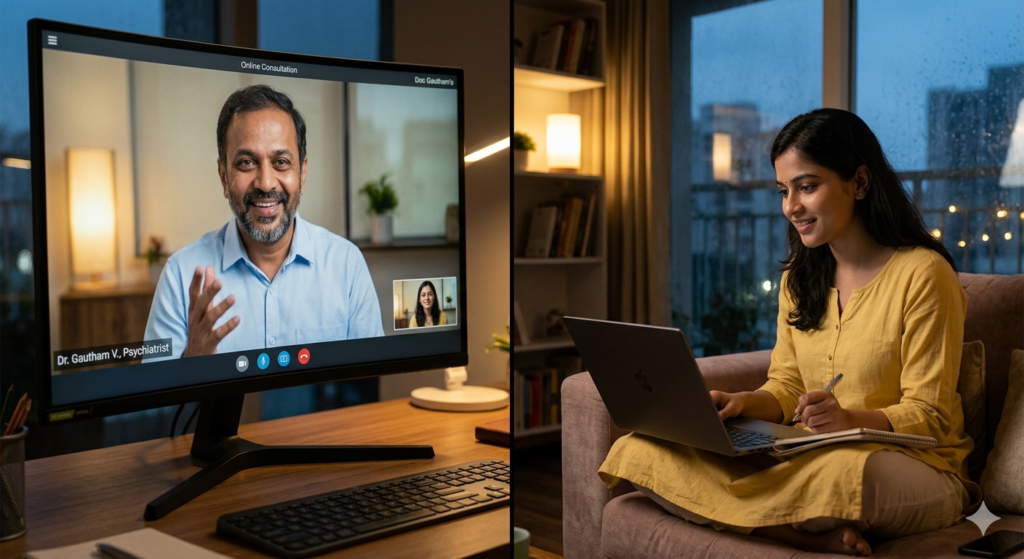
If you are based out of Chennai. The clinic accepts telemedicine requests. It also states that Dr Gautham has to examine a patient in detail, and counseling other than follow-up may not be possible or effective by phone or video without an initial meeting. So please ask what format works for your family. A parent or legal guardian must make the telemedicine request for anyone under age 18.
What to Expect in a Family Therapy Session
Family therapy sessions typically take anywhere from 45 minutes to an hour and a half or so. The therapist will discuss confidentiality and session procedures, invite everyone to speak, ask what you all hope to change, and may meet separately with individuals if necessary. You finish with agreed next steps.
You don’t have to have a perfect record. Thinking ahead about what most concerns you, what you want to change, and who should be involved is helpful. Bring your medical records or prescriptions, if any.
When to Call in the Experts
If conflict is frequent or intense, if someone is withdrawing, oddly irritable, sleeping or eating poorly, struggling at school or at work, if alcohol or drugs are involved, or if you are worn out from holding things together, consider talking to a professional.
Get urgent help if someone is in danger of hurting themselves or others or is not safe at home. Family therapy is not an emergency service. Go to the nearest hospital emergency department, or call Tele-MANAS at 14416 (free, 24 hours a day, 7 days a week, multiple languages). Where there is violence or abuse, safety is a priority, and a therapist will discuss what is appropriate.
Family Therapy in Chennai – Frequently Asked Questions
- What is family therapy?
Family therapy (also called family counseling or systemic psychotherapy) is a talking therapy in which family members meet with a trained therapist to improve the way they relate to, communicate with, and solve problems within the family. It’s not one person’s fault. It’s about relationships and habits.
- Who Needs Family Therapy, and When Should a Family Go for Family Therapy?
Any family that feels stuck will benefit; you don’t have to wait until a crisis. Common signs include repeated arguments, silence, major life changes, and a worrying change in a child’s behavior or a member’s health condition affecting everyone. If conflict impacts sleep, school, work, or safety, see a professional soon.
- What issues can family therapy address?
Common concerns include communication difficulties, parent-child and sibling conflict, parenting problems, life changes, distance and trust issues, and the impact of a family member’s mental health condition or addiction. The first step will be to assess if family therapy is suitable.
- Does every family member have to attend?
Not necessarily. Sessions are usually attended by those most concerned, and attendance can vary over time. The children are included where the subject and their age allow.
- Can family therapy be done without family?
Often, yes. Therapy can help even one person who is willing to understand the patterns and respond differently, and sometimes others join later. Some worries, such as symptoms in oneself, are better evaluated individually at first.
- What is the first family therapy session like?
A conversation about your concerns, who is involved, and what you hope will change. The therapist explains confidentiality and how the sessions work and invites each person to speak. Doc Gautham’s Neuro Center process includes an evaluation by Dr Gautham.
- How long does family therapy last?
That depends on the issues and the family. Some families need only a few short sessions, while others with longer-standing difficulties may need more. Your therapist will regularly review progress with you.
- Is family therapy private?
Therapists are expected to keep what is discussed confidential, except when there is a risk of serious harm to someone. When working with families, inquire at the beginning about the use of information from individual conversations.
- What is the difference between couple’s therapy and family therapy?
Family therapy involves many relationships within a family, such as parents, children, siblings, or other relatives. Couples counseling is about the relationship between two people. Both are helpful, and some families start with one and then add the other.
- Can you get family therapy online?
The clinic provides telemedicine consultations, in accordance with the Telemedicine Practice Guidelines of India, especially for those who are located outside Chennai or India. It says counseling other than follow-up may not be effective by phone or video without an initial meeting.
- Find out a family therapist in Chennai.
Choose a professional with the training to match your concern. Ask about qualifications and registration (e.g., a state medical council for psychiatrists or the Rehabilitation Council of India for clinical psychologists), experience of working with families, format of sessions, languages, fees, and confidentiality.
- How do I schedule a family therapy session at Doc Gautham’s Neuro Center?
Call to ask about availability, fees, and what to bring. If you live outside Chennai, you can request a telemedicine consultation through the clinic’s website. The clinic advises calling first to understand charges and procedures before you visit.
Book a Family Therapy Consultation in Chennai Today
Seeking help is not a sign that you or your family are failing; it is often a sign that people care about one another. Contact Doc Gautham’s Neuro Center to discuss whether family therapy is suitable for your family.
- Address: Doc Gautham’s Neuro Centre, 4/68 P C Hostel Road, Chetpet, Chennai 600031
- Phone:
- Hours:
- Telemedicine: Request a consultation
Call now · Get directions · Request telemedicine consultation
If you or someone in your family is in immediate danger, go to the nearest emergency department or call Tele-MANAS on 14416.
Related: Couples Therapy · Child and adolescent psychiatry · Psychotherapy and counselling · Telemedicine · About Dr. Gauthamadas · Contact